



Dollar vs Rupee: Despite reaching a consensus on a trade deal with America and free trade agreements with the European Union and Britain, the rupee is not getting significant support. On Monday, the first trading day of the week, the rupee reached 90.67 per dollar with a decline of one paisa in the opening session of the interbank foreign exchange market. Although it opened strong at 90.63 per dollar at the start of trading, it soon slipped under selling pressure. Earlier on Friday also, the rupee had closed at 90.66 per dollar after fluctuating in a limited range.
Why is the Rupee getting weak?
Experts believe that the withdrawal of foreign investors and the continuous strengthening of the US dollar are creating pressure on the rupee. The Dollar Index, which measures the strength of the dollar against six major global currencies, rose 0.02 percent to reach 96.93, the effect of which is also visible on the currencies of emerging economies.
Apart from this, a slight rise in crude oil prices is also not favorable for the rupee. India imports a large part of its energy needs, so when oil becomes expensive, the demand for dollars increases and the rupee weakens. International benchmark Brent crude was seen trading at 67.78 dollars per barrel.
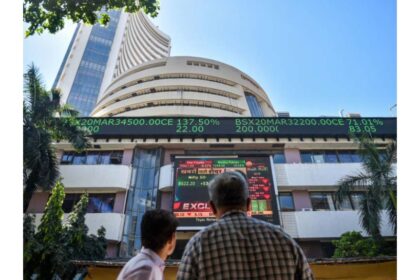
Anil Kumar Bhansali of Finrex Treasury Advisors LLP says that due to the US President’s Day holiday, cash demand currently remains low, but the market’s eye is fixed on the trade balance data to be released on February 16. Meanwhile, weakness was also seen in the domestic stock market. The BSE Sensex slipped to the level of about 82,555, while the Nifty came around 25,459. Foreign Institutional Investors (FIIs) sold shares worth more than Rs 7,395 crore on Friday, creating additional pressure on the rupee.
Impact of reduction in Forex Reserves
According to fresh data released by the Reserve Bank of India, the country’s foreign exchange reserves declined by $6.711 billion to $717.064 billion in the week ended February 6. This decline in reserves is also affecting market sentiment. Overall, a strong dollar, selling by foreign institutional investors, high crude oil prices, and shrinking foreign exchange reserves—all these factors combined are maintaining pressure on the rupee.